What is picking?
Back to Knowledge BasePicking refers to the tearing or ripping of the surface of paper or board caused by mechanical stress during the transfer of printing ink in the printing process.
The compressive and tensile forces generated in this process exceed the strength properties of the printing substrate. Picking occurs in various forms on coated printing substrates, but can also be observed on uncoated papers and cartons.
A distinction is made between base-paper picking, coated-surface picking, blister picking, spot picking and impurity picking. In all cases, components of the coating, fibres, impurities or even fillers detach from the surface.
Such components accumulate on the blanket or may migrate onto the printing plate during the process, leading to disruptive print defects and significant losses in quality.
All the types of picking listed are usually caused by substandard printing stock. Due to their material composition, recycled printing stocks are more prone to material flaking or fibre deposits on the rubber blanket than printing stocks made from virgin fibres.
Possible remedies include reducing the tack of the printing ink by adding printing additives or using a softer ink series. Reducing the printing speed or using low-tack rubber blankets may also help. Often, the problem can only be resolved by replacing the substandard material.
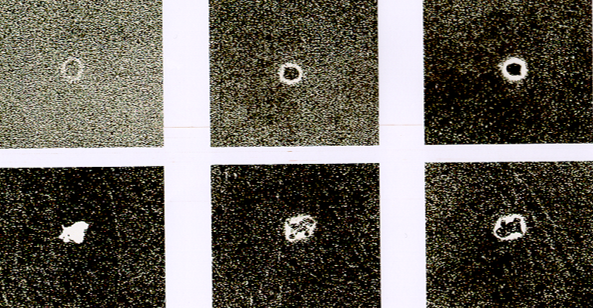
Below are typical examples of printing defects caused by tearing during the printing process: